Source 52-58 HRC Excavator Bucket Pin for Construction, Mining, and Roadwork
Find 30 verified listings for 52-58 HRC Excavator Bucket Pin from suppliers in Guangdong and Ningbo. Compare hardness ratings, materials like 40Cr, and compatible brands such as Komatsu and John Deere for your heavy equipment needs.
Key considerations
Products List
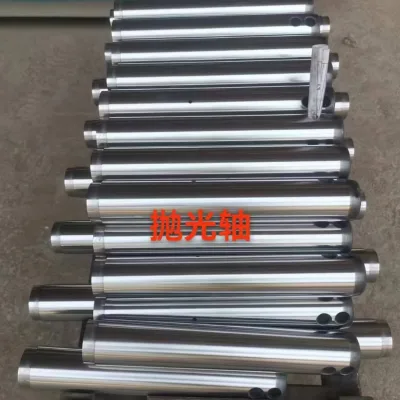


Hot Sale Excavator Spare Parts High Precision Excavator Pins Bucket Pin 208-23220
$0.30 - $0.60
MOQ: 100 Pieces




High Quality Bucket Pin and Bush 40cr Excavator Parts and Bushing Excavator Pin
$0.10 - $10.00
MOQ: 100 Pieces


Comprehensive Sourcing Guide
Strategic Sourcing Guide for High-Hardness Excavator Bucket Pins
Understanding the Technical Profile of 52-58 HRC Bucket Pins
When sourcing components labeled with a hardness range of 52 to 58 HRC for excavator bucket pins, buyers must first recognize that this specific metallurgical profile indicates a component designed for high-wear environments where standard pins might fail prematurely. The core keyword "52-58 HRC Excavator Bucket Pin" points to a critical wear part where the balance between surface hardness and core toughness is paramount. Based on observed market data, hardness values for similar heavy-duty excavator components vary significantly, with some listings specifying ranges like 50-60 HRC, 58-62 HRC, or even lower ranges such as 32-42 HRC depending on the specific application and material grade.
The 52-58 HRC range suggests a material that has undergone precise heat treatment to resist abrasion from rock, stone, and soil without becoming brittle. In the provided product observations, materials such as 40Cr and 42CrMo are frequently cited for pins requiring high strength. These alloy steels are typically selected because they respond well to quenching and tempering processes, allowing manufacturers to achieve the target hardness while maintaining the ductility necessary to withstand impact loads. A pin with a hardness of 58-62 HRC, as seen in some listings, might be intended for more aggressive mining applications, whereas the 52-58 HRC target is often optimal for general construction and earthmoving where a slightly lower hardness prevents catastrophic shattering under sudden shock loads.
Buyers should verify the manufacturing process, as the method used to achieve this hardness is as critical as the final number. The observed data indicates that "Forging" and "Casting" are common techniques, with forging generally preferred for pins due to the grain flow alignment that enhances fatigue life. Surface treatments like "Polishing" are also noted, which can reduce friction and wear during operation. The hardness is not merely a static number; it is the result of a controlled thermal cycle. When evaluating a supplier, the buyer must ensure that the hardness test results are consistent across the batch, as variations outside the 52-58 HRC window could indicate inconsistent heat treatment, leading to premature failure or excessive wear.
Compliance, Certification, and Quality Assurance Standards
In the global market for heavy machinery parts, certification serves as a primary proxy for quality assurance and manufacturing discipline. The supplied facts highlight that ISO 9001:2015 is a prevalent certification among suppliers, with some listings explicitly stating "ISO9001: Condition:New" or combining it with CE marks. These certifications indicate that the manufacturer operates under a quality management system that ensures traceability, consistent production processes, and adherence to international standards. For a component as critical as an excavator bucket pin, the presence of an ISO 9001 certification is a baseline requirement for serious procurement.
Beyond the general quality management systems, specific product certifications such as CE (Conformité Européenne) are observed in the data. The CE mark suggests compliance with European health, safety, and environmental protection standards, which is particularly relevant for machinery operating in regulated markets. When sourcing pins with a specific hardness like 52-58 HRC, buyers should request evidence that the manufacturing process adheres to these certified standards. The data also mentions "ISO" as a general certification category, which reinforces the need for suppliers to demonstrate that their materials and processes meet recognized international benchmarks.
It is crucial to distinguish between the certification of the factory and the certification of the specific product batch. While a supplier may hold an ISO 9001 certificate, the actual pins delivered must meet the specified hardness and material requirements. The observed listings mention "Quality: Guaranteed" and "Warranty: 6 Months," which are contractual assurances that complement the certifications. However, these are not substitutes for third-party verification. Buyers should verify that the supplier's quality control procedures include hardness testing for every batch or a statistically significant sample size. The absence of specific test data in public listings means the buyer must explicitly request hardness reports and material certificates (Mill Test Certificates) to confirm that the 52-58 HRC specification is met in the actual delivered goods.
Cost Drivers and Pricing Variables in the Market
The pricing of excavator bucket pins is influenced by a complex interplay of material costs, manufacturing complexity, and logistical factors. The observed price range in the market spans from $0.1 to $500 USD, a vast disparity that reflects differences in pin size, weight, material grade, and the specific excavator model compatibility. A pin weighing 0.17 kg, as noted in some product descriptions, will naturally command a lower price than a heavy-duty pin for a 60-ton excavator. The "52 58 hrc" specification itself is a cost driver; achieving this precise hardness range requires specialized heat treatment equipment and rigorous quality control, which adds to the production cost compared to standard, unhardened pins.
Material selection is another primary cost determinant. The data indicates the use of 40Cr and 42CrMo steels, which are alloy steels more expensive than carbon steels due to the addition of chromium and molybdenum. These alloys provide the necessary mechanical properties for high-hardness applications. Suppliers offering pins made from these materials at the lower end of the price spectrum may be compromising on the quality of the alloy or the precision of the heat treatment. Conversely, higher prices often correlate with the use of premium-grade alloys, advanced forging techniques, and comprehensive surface treatments like polishing or coating to enhance wear resistance.
The Minimum Order Quantity (MOQ) also impacts the effective unit cost. The observed MOQ range is 1 to 100 units. Buyers purchasing single items or small batches may face higher per-unit costs due to the setup costs associated with custom manufacturing and heat treatment. Suppliers offering "Customization: Available" and "Customized" options often require higher MOQs to justify the tooling and process adjustments. Additionally, packaging requirements such as "Anti-Rust Paper," "Carton," "Wood Case," or "Pallet" add to the final landed cost. Buyers should consider the total cost of ownership, including shipping and packaging, rather than focusing solely on the base unit price, especially when sourcing high-performance components where reliability is critical.
Typical Applications and Compatibility Matrix
Excavator bucket pins are not universal components; they are engineered to fit specific machine models and operating conditions. The supplied data lists a wide array of compatible brands, including Kubota, John Deere, Wirtgen, Sany, Atlas Copco, Sandvik, CNH, Liebherr, Hyundai, Komatsu, Manitou, Kobelco, LiuGong, Metso, Doosan, Xgma, and XCMG. This extensive compatibility list underscores the importance of matching the pin to the exact machine model to ensure proper fit and function. The specific models mentioned, such as PC200, ZX330, R290, PC650, ZX200, and various part numbers like 1354853, 2477631, and 9C0624, serve as critical identifiers for procurement.
The hardness range of 52-58 HRC is particularly suited for demanding working conditions. The data notes that the "Working Condition" for similar components includes "Stone" and "Rock," indicating that these pins are designed for environments with high abrasion. In such conditions, a pin that is too soft will wear down rapidly, leading to excessive clearance and potential bucket damage, while a pin that is too hard may crack under impact. The 52-58 HRC range offers a balanced solution for rock excavation, grading, and general earthmoving where abrasive wear is a primary concern.
Buyers must also consider the weight and size specifications. The observed standard range of "6-60ton" suggests that these pins are available for a wide spectrum of excavator sizes, from mini-excavators to large mining machines. The "Part No." and "Description" fields, such as "Pin&Washer," highlight that procurement often involves ordering the pin as part of a kit or assembly. When sourcing, it is essential to cross-reference the part number with the excavator's service manual to ensure the hardness and dimensions match the original equipment manufacturer (OEM) specifications. Mismatched pins can lead to accelerated wear on the bucket and boom, causing significant downtime and repair costs.
Supplier Evaluation and Manufacturing Capability Assessment
Evaluating a supplier for high-hardness excavator pins requires a deep dive into their manufacturing capabilities and technical expertise. The data highlights that some suppliers boast a "Technical Team: Over 30years," which suggests a level of experience that can be crucial for maintaining consistent quality in heat-treated components. Experience in the industry often translates to better process control and the ability to troubleshoot issues related to material selection and heat treatment. Buyers should prioritize suppliers with a proven track record in the specific niche of heavy machinery parts, particularly those who specialize in forging and casting.
The manufacturing process is a key differentiator. The observed data mentions "Forging" and "Casting" as techniques. Forging is generally superior for pins because it aligns the metal grain structure, providing higher fatigue strength and resistance to impact. When a supplier claims to use forging, buyers should verify the specific forging equipment and the subsequent heat treatment capabilities. The ability to achieve a precise hardness range like 52-58 HRC requires sophisticated furnaces and quenching tanks. Suppliers who can provide detailed information about their heat treatment cycles and hardness testing procedures are more likely to deliver reliable products.
Location is another factor to consider, with "Guangdong" and "Ningbo, China" appearing as places of origin. These regions are known for their robust manufacturing ecosystems, but buyers should still verify the specific factory's capabilities. The "Place of Origin" should be cross-referenced with the supplier's physical address to ensure transparency. Additionally, the "Condition: New" attribute confirms that the parts are not refurbished, which is critical for safety and performance. Buyers should also check for "Sample: Yes" availability, as testing a sample before placing a large order is a prudent risk mitigation strategy.
Quality Control Protocols and Long-Term Procurement Strategy
Ensuring the quality of 52-58 HRC excavator bucket pins requires a robust quality control (QC) strategy that extends beyond the initial purchase. The observed data includes attributes like "Quality: Guaranteed" and "Warranty: 6 Months," which are important contractual protections. However, a warranty is a reactive measure; proactive QC is essential. Buyers should implement a sampling plan that includes hardness testing, dimensional inspection, and visual examination for surface defects. The "Hardness: 50-60HRC" and "Hardness: 58-62 HRC" variations in the market data suggest that buyers must be vigilant in verifying that the specific batch meets the 52-58 HRC target.
Long-term procurement considerations involve building a relationship with a supplier who can provide consistent quality over time. The "Customization: Available" and "Customized" attributes indicate that suppliers are willing to adapt to specific needs, which is valuable for maintaining a steady supply of parts that match the exact requirements of a fleet. Buyers should also consider the "Packing" methods, such as "Wood Case" or "Anti-Rust Paper," to ensure that the pins arrive in good condition and do not suffer from corrosion during transit. Proper packaging is part of the quality assurance process.
To maintain a reliable supply chain, buyers should establish clear specifications and communication channels with their suppliers. This includes defining the acceptable tolerance for hardness, material composition, and dimensional accuracy. Regular audits and performance reviews of the supplier can help identify any deviations in quality early. The "Technical Team" expertise mentioned in the data suggests that suppliers with experienced staff can offer valuable technical support and guidance, helping buyers optimize their procurement strategies. By focusing on suppliers with strong QC protocols and a commitment to continuous improvement, buyers can ensure a steady supply of high-performance bucket pins that minimize downtime and maximize the efficiency of their excavator fleets.
Comparative Analysis of Product Specifications
| Feature | Observation A | Observation B | Observation C |
|---|---|---|---|
| Hardness Range | 50-60 HRC | 58-62 HRC | 32-42 HRC |
| Material | Customized | 42CrMo 40Cr | 40Cr |
| Process | Forging & Casting | Forging | Forging |
| Surface Treatment | Polishing | Not Specified | Not Specified |
| Certification | ISO 9001:2015 | CE, ISO9001 | ISO |
| Application | Excavator | Excavator | Excavator |
| Packing | Anti-Rust Paper, Carton | Wooden Box | According to Customer Requirements |
| Condition | New | New | New |
The table above illustrates the variability in specifications available in the market. While the core keyword focuses on 52-58 HRC, the market offers a spectrum of hardness levels. Buyers must carefully select the option that best matches their operational needs. Observation A and B represent high-hardness options suitable for abrasive environments, while Observation C suggests a softer, more ductile option for less demanding conditions. The material consistency (40Cr, 42CrMo) and the forging process are common threads, but the surface treatment and packaging vary. This variability underscores the need for buyers to specify their exact requirements clearly to avoid receiving products that do not meet the intended performance criteria.
FAQs
What materials are used for 52-58 HRC Excavator Bucket Pin?
These pins are typically manufactured from 40Cr or 42CrMo alloy steels. These materials are selected for their ability to withstand high hardness requirements while maintaining necessary core toughness for impact resistance in stone and rock environments.
Which certifications do manufacturers of 52-58 HRC Excavator Bucket Pin hold?
Suppliers often hold ISO 9001:2015 and CE certifications to ensure quality management and safety compliance. These certifications indicate that the production process adheres to international standards for traceability and consistent manufacturing quality.
How is the hardness of 52-58 HRC Excavator Bucket Pin achieved?
Hardness is achieved through precise heat treatment processes like quenching and tempering on forged or cast alloy steel. This process ensures the pin reaches the target hardness range while preventing brittleness during heavy-duty operation.
Can I find 52-58 HRC Excavator Bucket Pin with customization options?
Yes, customization is available for specific model requirements and material specifications. Buyers can request tailored dimensions and hardness levels to match their specific excavator models like PC200 or ZX330.
What is the warranty period for 52-58 HRC Excavator Bucket Pin?
The standard warranty period provided is typically six months for new parts. This warranty covers defects in material or workmanship, ensuring reliability for the initial period of operation in demanding conditions.
Which excavator brands are compatible with 52-58 HRC Excavator Bucket Pin?
These pins are compatible with major brands including Kubota, John Deere, Komatsu, and Hyundai. Specific part numbers like 1354853 or 2477631 help identify the correct fit for models ranging from 6 to 60 tons.